
We map how every person thinks & learns.
Stealth Dog Labs (in combination with your personal use of AI) becomes a responsible mentor, teaching you and your company the way only a great tutor could — using a proprietary technology based on 150 years of scientific, peer-reviewed research.
Workforce transformation is now human-centric, scalable, and results-oriented.


MEET YOUR MENTORS
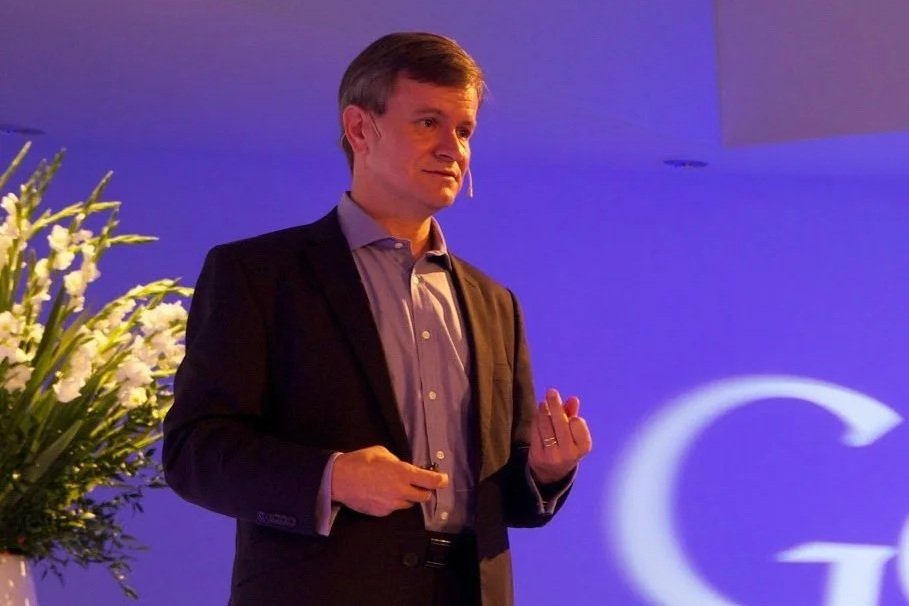
Christopher Skinner
Founder & Inventor
The reason I became an abstract mathematician, and really, the reason why the technology behind Stealth Dog Labs even exists, is because of a family tradition started in the late 1800s by my great-great-aunt, Rose Skinner. An educator herself, Rose was one of the few women of her time to receive a master’s degree from Tulane University. And while she had no children of her own, she made it her personal mission in life to ensure that her nieces and nephews all received a proper education. In most cases, she even paid for it.
However, there were rules.
Don’t follow a trend. Learn what you’re good at.
Study something and improve yourself.
Remember: once you learn something, no one can ever take it away from you.
My grandfather really wanted to become an electrician and study refrigeration, which in the 1920s, was experimental. But Rose enabled him to choose that career. And when it was time for my father to pursue a higher education, my grandfather reminded him of what Rose had set out to accomplish in their family. That’s how my father began his career in engineering—by discovering what he was good at, pursuing it as a form of self-improvement, and using that knowledge to build a successful business and provide for his family.
Naturally, my father hoped I’d find the same love for engineering when I started college, but it wasn’t where I excelled. Instead, I found my calling in mathematics. And because of those guidelines established by Rose all those years before, I was encouraged to pursue it, regardless of where it might lead.
This was before the internet even existed, at least as we know it today. Back then, my options were to either become a teacher, an actuary, or to follow the career path of Alan Turing in government intelligence. But the internet disrupted this model, because suddenly, there were far more applications for studying hidden signals, especially in language.
The basic theories of abstract mathematics taught to me in school became the foundation of everything I created next, including a technology that ultimately became part of how Google priced and managed media. But even with the success of a major acquisition, my education was not done. Inspired yet again by Rose Skinner, I went to Harvard to study with Clayton Christensen.
Clayton said, “Disruption happens when you make something accessible that was previously exclusive.” For years, I had specialized in understanding and revealing the structure beneath surface noise. Yet with Clayton as my mentor, I was able to better understand the invisible need beneath that noise, and connect it directly to outcome — especially when it came to disruptive innovation. However, it was the intellectual foundation I received through the study of abstract mathematics that enabled me to measure all of it. And when I showed Clayton that I could actually measure the theories he had created based on intuitive knowing, he responded “wow” — then directed me to Bob Moesta, the creator of Jobs to Be Done Theory, who has since become a lifelong friend.
But that is why, through Stealth Dog Labs, I am able to provide one-on-one mentorship at scale. A great mentor who understands how you think has always existed, but has only been available to the privileged few. Education and mentorship, for the rest of us, has always leaned more towards a one-size-fits-all model. And seldom in this model are the Rose Skinner guidelines ever considered:
What are you good at?
What motivates you to improve?
And what is uniquely yours?
These are the questions we answer for individuals, whether it’s a truly one-on-one experience, or one provided for your entire workforce at scale in combination with your existing AI tools.
In the process, we help your workforce transform—not in a grueling or mandatory exercise, but through the pursuit of passion, knowledge and clarity. Those are the true invisible forces that separate the good from the great, and it’s a gift we’re offering for those who hunger for more.

“Decide what you stand for. And then stand for it all the time.”
-Clayton Christensen
MEET YOUR MENTORS
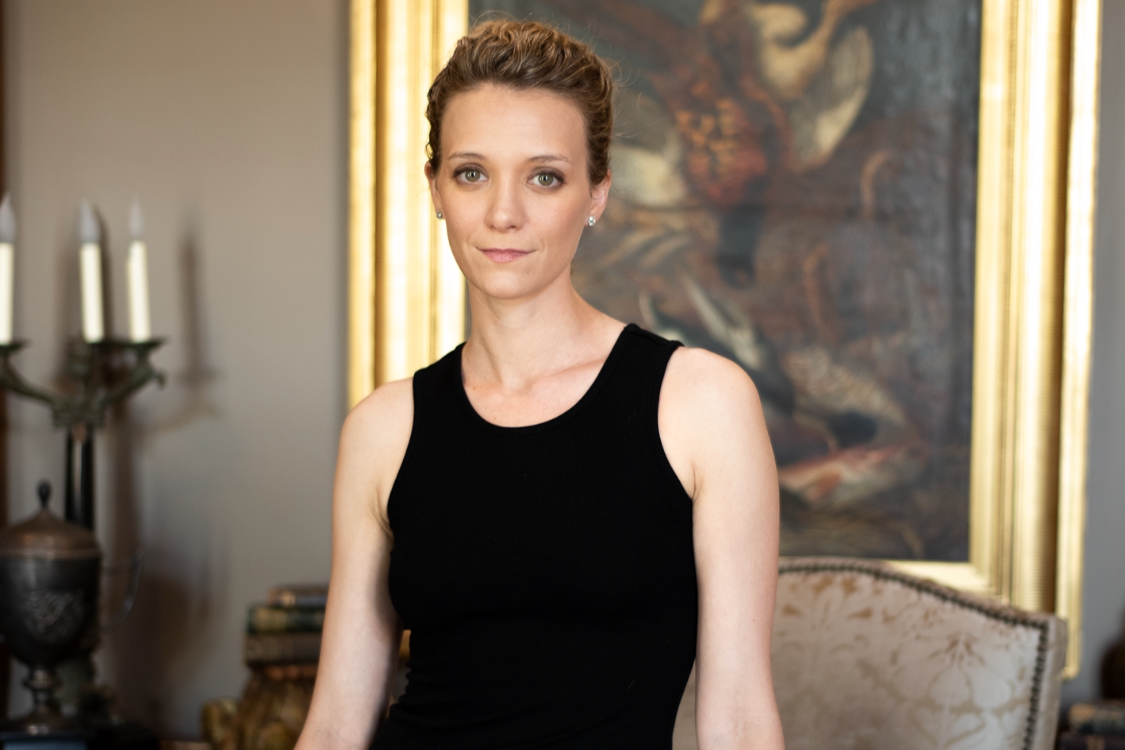
Amber Hargroder
Co-Founder & Strategist
Education, to me, is a gateway to a stronger relationship with the world at large. And throughout my life, I have consciously chosen to both expand and deepen that relationship. On paper, you’ll see an education influenced by Catholic school, survey courses, and various degree programs, but there is a true love of learning that makes my résumé look like a shadow in comparison to everything else I’ve studied, from holistic herbalism and interior design to the culinary arts and secrets of the honeybee.
Of course, when someone inevitably asks me what I do, the easiest answer is to say “writer.” Having written and published plays, a novel, short stories, and entire collections of poetry, that is a fair word to use. I’ve also served as a ghostwriter for business leaders, politicians, and even the more empathetic among us who had enormous things to say but simply couldn’t find the words. Yet when we say that good writing is good thinking, we often forget the ocean of knowledge, feelings, and understanding required to effectively communicate with another person.
Personally, I’ve always been a fan of Austrian philosopher Ludwig Wittgenstein, whose challenging work can effectively be summarized into two concepts:
When we communicate with someone we are effectively trading “pictures of facts,” requiring two people to basically share a common definition of words in order for a transmission of ideas to actually take place. For example, the word “dog” — do we share the same image of dog in our mind’s eye? I see the blonde stray who showed up at our house, on the verge of death, who is now healthy and sleeping by my feet. What do you see? I doubt it was originally the exact same one. Now consider bigger, more abstract words like AI, innovation, or productivity. No wonder we struggle to communicate effectively! One person’s idea for salvation could be another’s picture of destruction! But that’s the struggle with language.
Conversations are really games, where language is merely a tool to express what we’re feeling. For example, if your spouse says, “you never spend time with me anymore,” they’re not playing the “let’s list all the times we are together game” or “let’s list all the things we’re sacrificing game.” No, they’re playing the “I need reassurance and comfort game.” And if you don’t see or understand the game at play, it can be detrimental to your understanding of yourself and your relationship with others.
Now, while we are condensing his ideas immensely here, it is a glimpse into how Wittgenstein — a man who struggled to communicate due to a terrible stutter — genuinely tried to help others. As he put it, “the task of philosophy is to show the way out of the fly bottle.” And, ironically, that’s what we do too, with technology.
I’ve given this a great deal of thought over the course of my career, namely as a strategist who paints with words. But since co-founding Stealth Dog Labs with Christopher, I’ve come to recognize something Wittgenstein could have never known or pinpointed.
The source of unhappiness isn’t necessarily our struggle to effectively share “pictures of facts,” but the games our own subconscious actively plays on us, proven by the results of our reports. It’s our inability to see ourselves clearly, and especially how we best learn or think. And it’s this blindness that puts us at the mercy of our environments, confusing us even more.
Every individual on this Earth thinks differently. Each of us is a single gem within a massive kaleidoscope of environments, experiences, and conversations. And every decision we make, every word we use, and every attempt to express our inner understanding to someone else reveals who we are. And what we do at Stealth Dog Labs is help you see that reality with absolute clarity. Because you can never be a true leader without first knowing yourself, while also having an understanding of others.
How do you best communicate? How do you overcome obstacles? How well can you collaborate with others, or inspire them to face uncertainty with confidence? The answers to these questions define your character — who you are and even who you can become. And those are the very questions I’ve grappled with, both as an individual and as a hired strategist. But now they can be answered at scale, for everyone in your organization.
And after twenty years of slinging ink as a writer and thinker, I truly believe that real communication begins with clarity — about yourself, about others, and about the world you're trying to shape. We give you that clarity. And it is my job to safeguard that promise, so that you can finally write your own story without ever feeling misunderstood.

“Finite players play within boundaries; infinite players play with boundaries.”
-James P. Carse
For the Media
Christopher Skinner
Christopher Skinner is an abstract mathematician, inventor, and CEO of Stealth Dog Labs, a decision intelligence firm that measures how people think and make decisions, then uses that understanding to transform how businesses grow.
Educated at LSU and mentored by Clayton Christensen, the father of disruptive innovation, and Bob Moesta, the creator of Jobs to Be Done Theory, Christopher brings a worldview rooted in causality, data, and the conviction that hidden structure exists beneath apparent noise. That conviction has guided more than 25 years of building technologies focused on one enduring goal: empowering people with data that guides clearer futures.
His track record reflects what happens when the right analytical framework meets the right team. At Oreck, he helped drive a transformation from $100 million in revenue to $400 million. His technology, integrated into Performics, was a contributing factor in turning a third-place marketing software company into a $750 million sale to Google. At Centro, a customer base grew from 50 to 2,500 and $50 million in sales became more than $600 million. At Raise, $30 million became $400 million. At Vodafone, he helped build an eighteen-country online media network. At SpiderOak, a failing company became National Security Software. These results share a common thread: the ability to identify where capacity exists, where it is blocked, and how to unlock it.
Today, through Stealth Dog Labs, Christopher applies that same methodology to enterprise workforce transformation. Using psycholinguistic analysis, SDL extracts cognitive profiles across 90+ dimensions and generates personalized AI prompts calibrated to how each individual processes information. The platform also equips leadership with mandate quality scoring, competitive intelligence, team composition modeling, and three-year trajectory forecasting, measuring transformation momentum before financial outcomes confirm it.
Christopher's thesis is straightforward: the companies that will dominate the next decade are not the ones that acquire their way to scale, but the ones that build outstanding capacity at the individual level. Transformation is possible, but only if you understand everyone. Not in aggregate. Not in cohorts. Everyone.
Amber Hargroder
Amber Hargroder is Chief Strategy Officer of Stealth Dog Labs — a decision intelligence firm that decodes organizational reality using publicly available data, without a single survey, interview, or round table.
Her foundation is political science and philosophy. She won the Crisler-Levine Award at the University of Louisiana at Lafayette for her thesis on Machiavelli and Morality, studied international business at Copenhagen Business School and under faculty from the London School of Economics — where she also developed a compendium on the Creative Industries and Experience Economy for the Danish Institute for Study Abroad.
But the deepest influence on her thinking has always been language itself — not just what people say, but why they say it, and what it conceals.
That question has defined twenty years of consequential work. As a ghostwriter, she has given a precise voice to business leaders, politicians, and public figures across multiple industries.
Her independent brand strategy practice — shaped in part by Seth Godin's altMBA — served clients from luxury ateliers, including Optimo Hats, to technology startups on three continents. And as Director of Communications for a publicly traded company, an email marketing strategy she built drove a 250% increase in sales.
As Deputy Communications Director for the Louisiana Department of Justice, she ghostwrote a 300-page book educating the public on cases central to Louisiana's sovereignty and the constitutional principles at stake. She also authored dozens of high-impact op-eds and served as speechwriter for a gubernatorial campaign that produced a historic first-ballot win in a fifteen-candidate jungle primary. Then she helped shepherd a landmark First Amendment case to the U.S. Supreme Court.
At Stealth Dog Labs, Amber leads brand strategy and organizational communication, working closely with Christopher to shape client engagements, partnerships, and the company's public voice.